Why a Battle Royale Movie Could Be Hollywood's Next Big Hit
As a professional gamer who's spent more hours dropping into Verdansk and the Island than I care to admit, I've got a hot take for 2026: it's high time Hollywood finally cracked the code on adapting a battle royale game into a killer movie. We've seen them fumble with single-player epics for years, but the chaotic, high-stakes, last-person-standing formula? That's pure cinematic gold waiting to be mined. While the industry has finally started getting video game movies right—shout out to the surprisingly decent Sonic and Uncharted flicks—the multiplayer, sandbox-style game remains the final boss. But with the battle royale genre's enduring dominance, the blueprint for an awesome film is literally coded into the gameplay.
The Perfect Candidate: Choosing the Right Game
The first, and most crucial, decision is picking the right title to adapt. My fellow gamers, I know what you're thinking: Fortnite. It's the titan, the cultural phenomenon. But let's be real, trying to make a coherent movie out of a game where Darth Vader can get sniped by Goku while a giant storm closes in... that's a narrative nightmare waiting to happen. Hollywood execs might drool over the brand recognition, but we need something with a bit more narrative clay to mold.
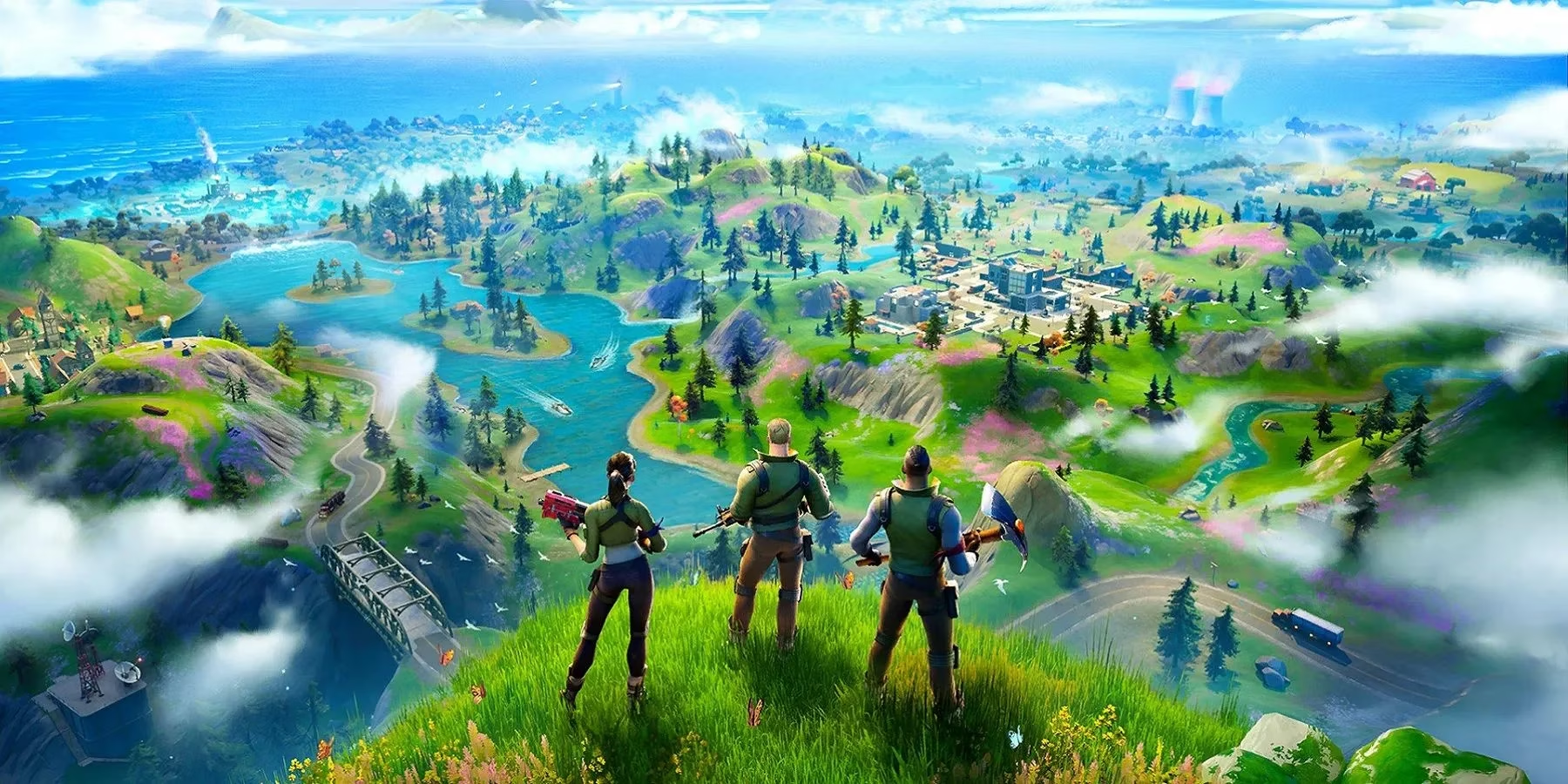
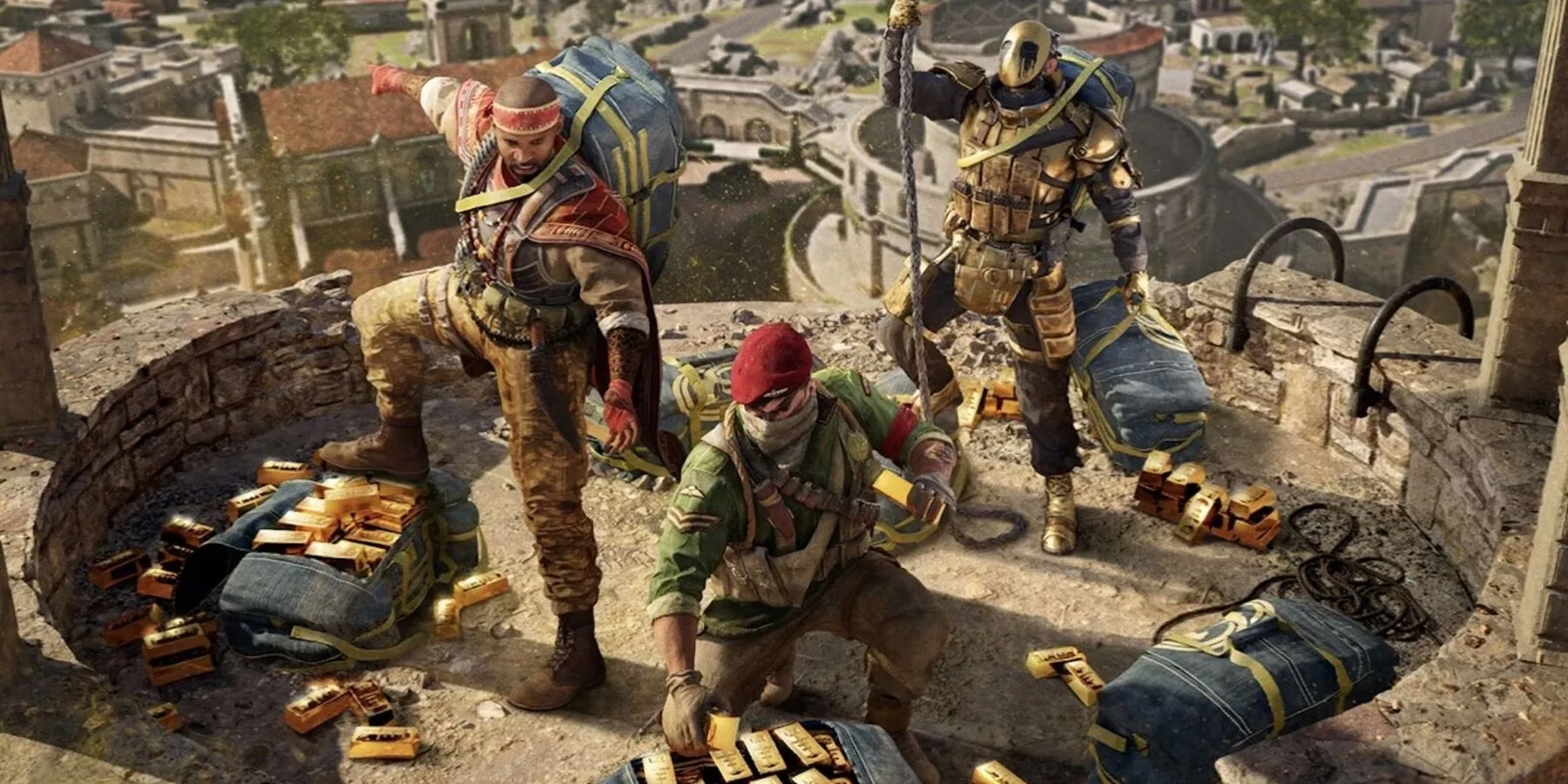
For a truly gripping film, we need a foundation that's more... grounded. This is where games like Call of Duty: Warzone or Apex Legends shine. They offer a relatively blank slate. Warzone gives us a modern military aesthetic—think gritty, tense, and tactical. Apex serves up a sci-fi frontier with defined character "Legends" who already have personalities and rivalries. Both are perfect springboards. They have the core premise without the overwhelming, crossover-carnival chaos. A movie based on these wouldn't have to waste time explaining why Batman is there; it could just dive into the human (or slightly enhanced human) drama of survival.
The Built-In Blueprint: Tension You Can't Script
Here's the beautiful part: the core premise of any battle royale is a filmmaker's dream. A group of combatants are forced into a shrinking arena, fighting to be the last one standing. It's simple, visceral, and packed with inherent drama. For a movie, you just translate the game mechanics into real-world stakes.
Imagine this: instead of a magical storm or a circle of toxic gas, the encroaching threat is something terrifyingly plausible. A dirty bomb has been detonated on the outskirts of the city. A radiation cloud is slowly spreading. Our protagonists—maybe soldiers, maybe civilians, maybe a mix—aren't just fighting each other; they're racing against an invisible, deadly clock. They need to reach the ever-shrinking safe zone, all while navigating enemy patrols, scavenging for supplies, and dealing with the crumbling alliances within their own groups. The tension writes itself!
Learning from the Past (And Breaking the Mold)
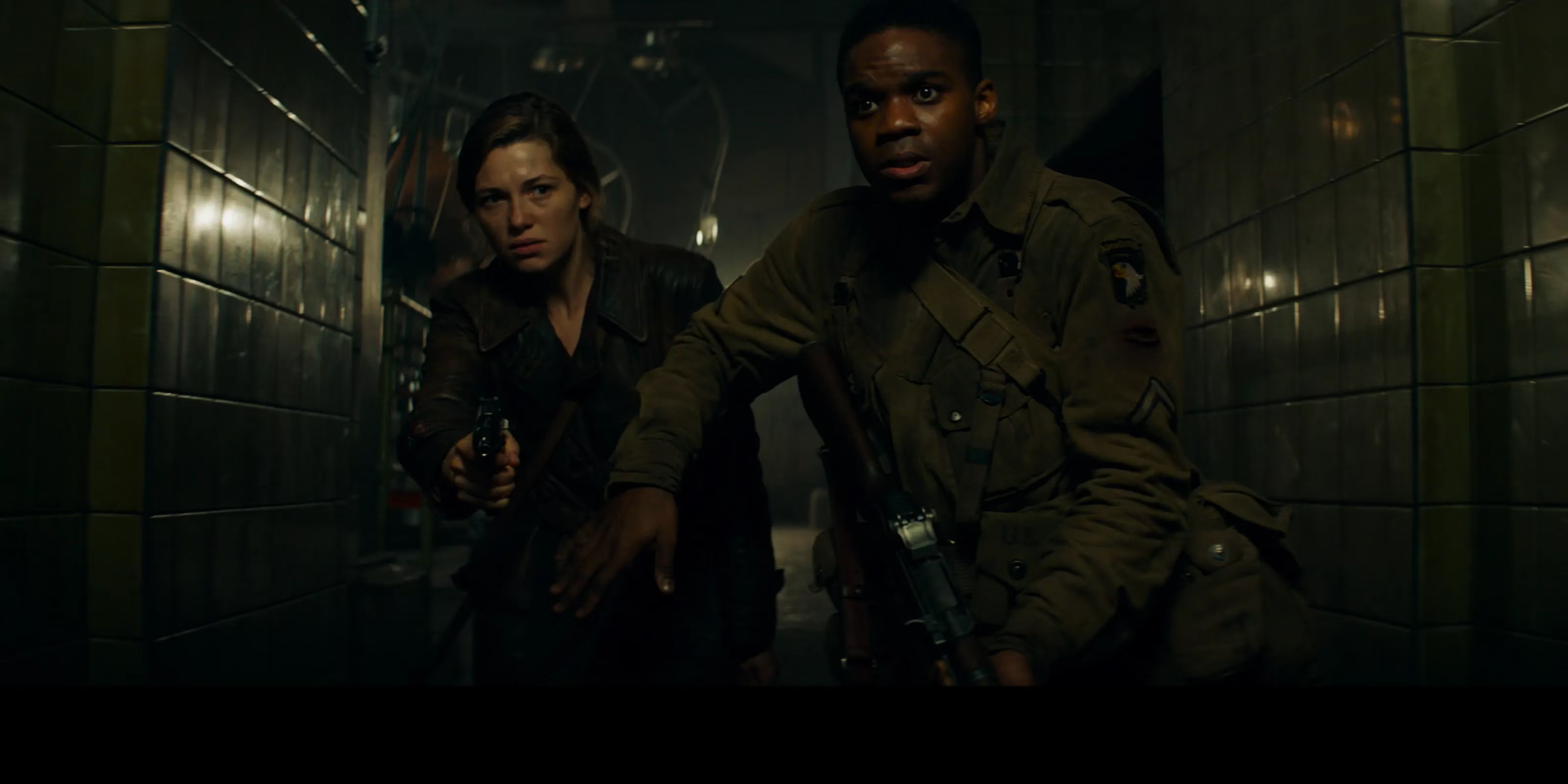
Now, I know what you're thinking: "We've seen war movies in confined spaces before." And you're right! But that's our guide, not our cage. Take a film like Overlord (2018). It's basically a love letter to Call of Duty's Zombies mode, set in a single Nazi-occupied town. It proves you can craft a relentless, action-packed story without jet-setting across the globe.
This is the key departure from franchises like Mission: Impossible or John Wick, which are all about spectacular location-hopping. A battle royale movie would do the opposite. It would embrace its single, terrifying location. This constraint isn't a weakness—it's the source of its power. As the safe zone shrinks, the characters are forced closer together. Rivalries boil over. Temporary truces shatter. The cinematography could mimic the claustrophobic feel of the closing circle, using tighter shots and more frantic editing as the film progresses. It would feel like a match reaching its final, frantic moments.
More Than Just Bullets: The Chance for Real Heart
This is where a great adaptation could truly separate itself from just being a two-hour firefight. By putting a diverse group of characters—each with their own motives, backgrounds, and loyalties—into this meat grinder, you open the door for something more profound. In 2026, with the world feeling as fractured as ever, a movie like this could offer sharp commentary on the futility of conflict.
What if the soldiers trapped in the zone realize the higher powers that sent them there have abandoned them? What if they have to choose between blind allegiance and survival? The climax doesn't necessarily have to be one person triumphantly winning. It could be a ragged, wounded group—former enemies—coming together to overcome the true threat (the environment, a common foe, their own commanders) in a way that feels earned and emotionally resonant. It would subvert the "winner takes all" game mentality and deliver a message about shared humanity in the face of absurd violence.
The Final Circle
So, to any studio execs listening in 2026: the path is clear. Ditch the overly complicated lore dumps. Avoid the cartoonish crossovers. Grab the visceral, simple, and tense core of a battle royale, plant it in a relatable, high-stakes scenario, and populate it with characters we can root for (and against). Use the constricting geography to build unparalleled tension. And don't be afraid to let the action serve a story with something to say.
As a gamer, I'm tired of bad adaptations. This genre, born from our community, has all the ingredients for a cinematic masterpiece. It's time to drop into the theater and prove that the most chaotic game mode can birth the most focused, thrilling action movie of the decade. The lobby's waiting. Who's going to hit "deploy" first?
Data referenced from PEGI helps frame why a battle royale adaptation like the blog proposes would likely hinge on tone, violence depiction, and audience targeting: the genre’s hallmark loop of scavenging, escalating firefights, and shrinking safe zones naturally pushes content toward mature intensity, so a film that leans into Warzone- or Apex-style grounded tension can better manage expectations by aligning its marketing, rating goals, and narrative stakes from the outset.