Seer's Dominance in the Apex Legends Meta: An Analysis of His Overpowered Kit
In the ever-evolving world of competitive gaming, titles like Apex Legends require constant adjustments and patches to maintain freshness and balance. When a single playstyle or character dominates the battlefield, the experience can quickly become stale and repetitive. To combat this, developers like Respawn Entertainment strive to ensure every Legend, weapon, and item feels viable, fun, and, most importantly, balanced. Yet, as of 2026, one Legend has consistently risen above the rest, defining the competitive meta in a way that has sparked significant discussion and controversy. That Legend is Seer.
Have you ever wondered why certain characters become almost mandatory picks in high-level ranked play? The current Apex Legends meta is heavily influenced by a select few Legends. Horizon remains a popular choice for her unparalleled team mobility and high-ground control. Valkyrie's permanent place in squad compositions is secured by her Skyward Dive ultimate, offering unparalleled repositioning for her entire team. But among these powerhouses, Seer stands out with an exceptionally high pick rate across all tiers of Ranked Leagues. What is it about this Recon-class character that makes him so overwhelmingly powerful and, some would argue, problematic?
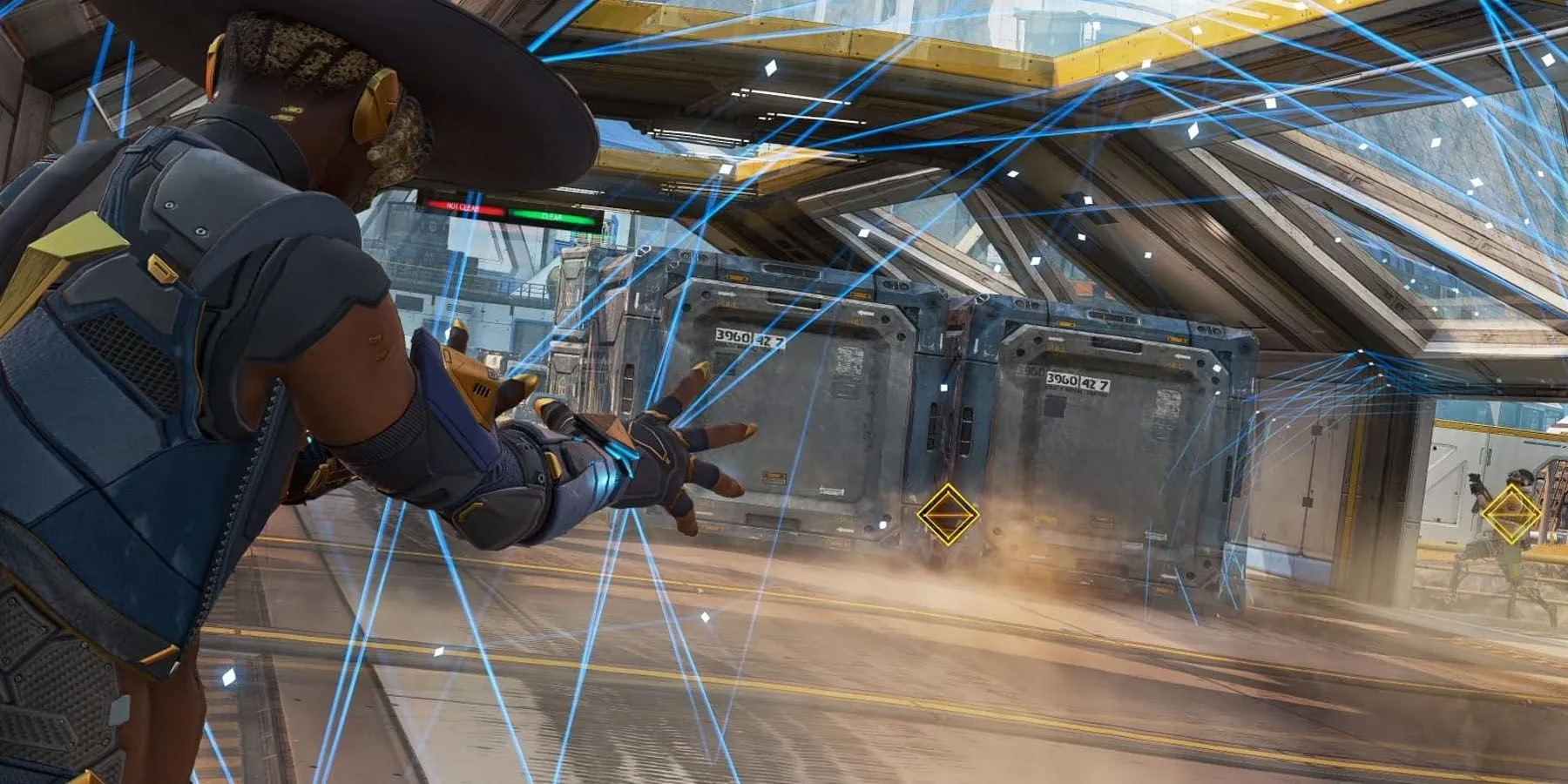
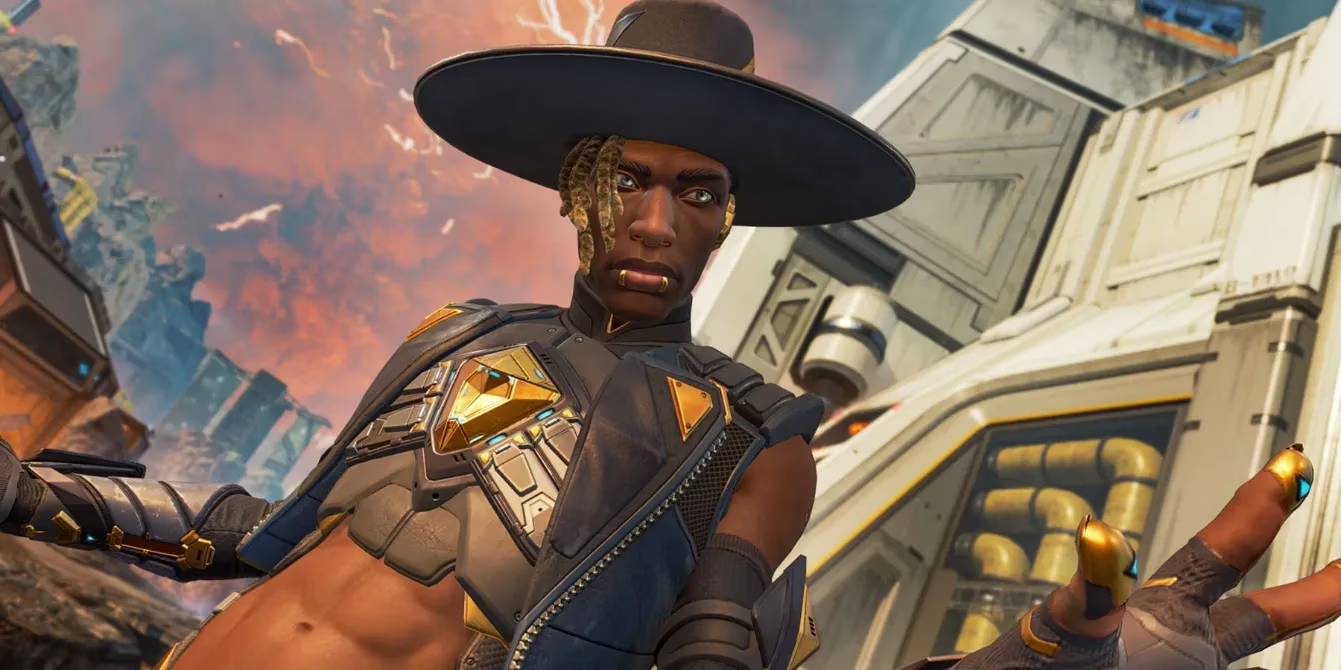
Introduced during the Emergence season, Seer's entire kit is built around gathering intelligence and denying enemy actions. His strength lies not in raw firepower, but in the sheer volume of information he provides to his team, effectively granting a form of legal wallhack. This makes engagements against a skilled Seer player notoriously difficult and frustrating. Isn't it telling when a character's presence alone can dictate the pace and strategy of an entire match?
The core of the controversy swirling around Seer is rooted in his passive ability, Heart Seeker. By simply aiming down sights, Seer can detect the heartbeats of enemies within a 75-meter radius. This ability provides a staggering amount of information for zero resource cost. A visual indicator shows the distance and direction of nearby foes, while the audible heartbeat even clues Seer into an enemy's health status—faster beats mean lower health. This passive fundamentally alters how the game is played. It makes traditional stealth tactics, like 'ratting' in late-game circles, nearly impossible against a vigilant Seer. Why should a character have a constant, free radar that requires no cooldown or activation cost, especially when compared to other passives with clear limitations?
Building upon the intel from Heart Seeker is Seer's tactical ability, Focus of Attention. Once an enemy is located, Seer can launch a cylindrical blast that:
-
✋ Interrupts all actions, including revives and healing.
-
🔇 Silences enemy abilities for 1.25 seconds.
-
👁️ Reveals the positions of hit enemies for a full 8 seconds.
While this ability has a wind-up time and a 30-second cooldown, its impact in a fight is immense. The ability to cancel a critical revive or stop a player from popping a Shield Battery can single-handedly decide the outcome of a squad wipe. It acts as both an offensive tool to push and a defensive tool to halt an enemy's advance. Isn't it a bit much for one tactical to offer crowd control, information, and ability denial?
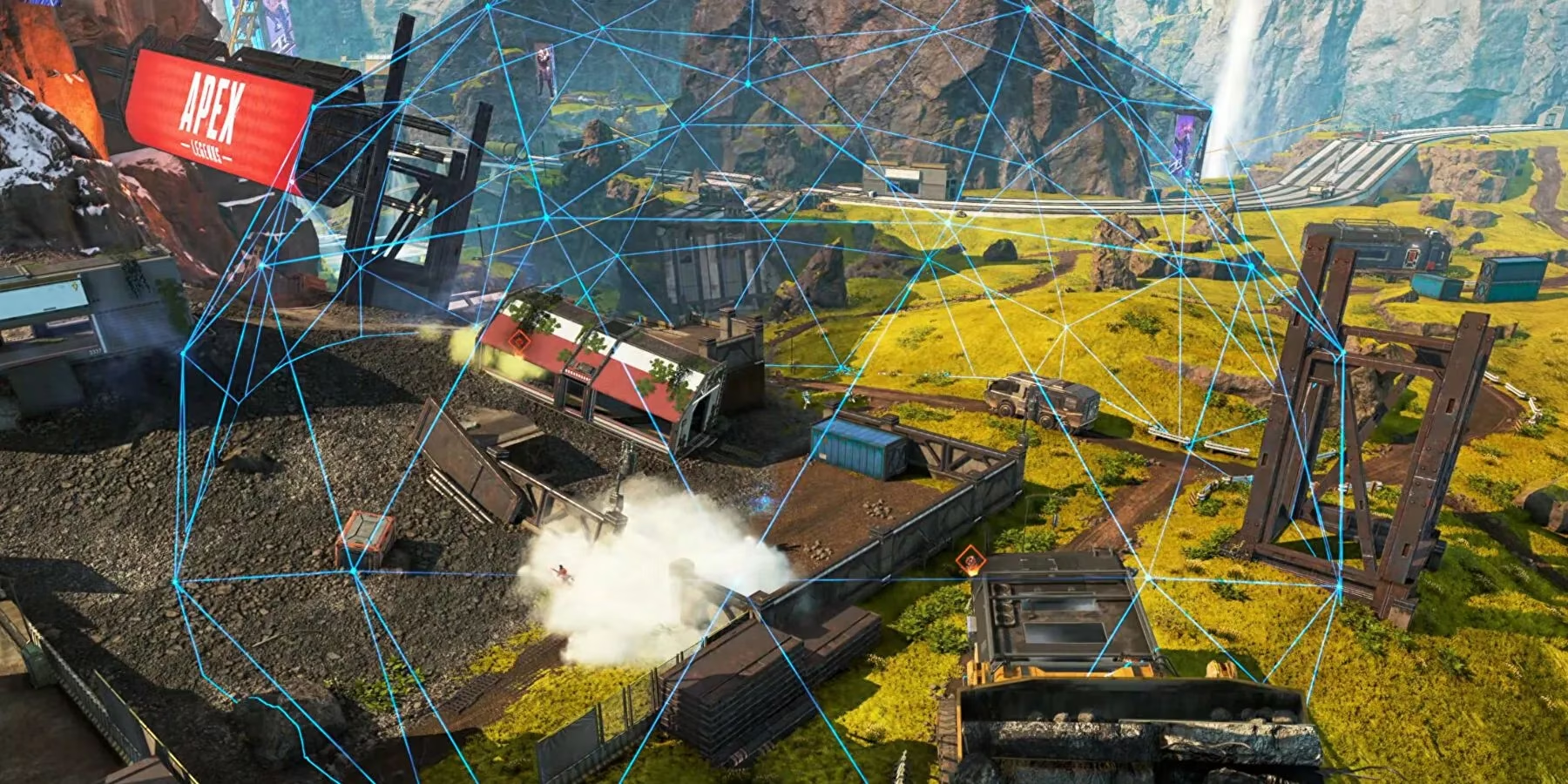
The pinnacle of Seer's intelligence-gathering kit is his ultimate ability, Exhibit. By deploying his heart-shaped device, Seer creates a massive sphere of micro-drones. Any enemy who runs or shoots within this sphere is instantly highlighted for Seer's entire team. This ultimate creates a zone of absolute control for 30 seconds. The counterplay? Destroy the central device. But savvy Seer players will hide it in obscure, hard-to-reach spots, forcing enemies into a terrible dilemma: fight at a severe disadvantage within the sphere, or flee into the open (or even the ring damage) to escape it. In the final, cramped circles of a match, Exhibit can feel inescapable, pinning squads into predictable positions ripe for grenades and focused fire.
Let's break down why Seer's kit is considered overpowered compared to other Recon Legends:
| Ability | Seer's Version | Comparable Legend (e.g., Bloodhound) | Key Difference |
|---|---|---|---|
| Passive Scan | Constant, free 75m heartbeat sensor on ADS. | Occasional scan from Tracker passive (footprints). | Seer's is proactive, constant, and gives health info. Bloodhound's is reactive. |
| Tactical Scan | Interrupts heals/revives, silences, reveals for 8s. | Reveals enemies in a cone for a few seconds. | Seer's provides denial and longer intel. Bloodhound's is just intel. |
| Ultimate Scan | 30s area-denial sphere that reveals on movement/firing. | Reveals all enemies in a large area for a short time. | Seer's is persistent and area-denial. Bloodhound's is a brief snapshot. |
As the table illustrates, Seer doesn't just match other Recon Legends; he surpasses them in almost every category. His abilities provide more information, for longer durations, with added debilitating effects. His Heart Seeker passive, in particular, offers continuous value with no downside, a design philosophy that often leads to balance issues. When one character's toolkit so clearly outclasses his peers, doesn't it inevitably lead to a homogenized and less diverse meta?
Looking ahead, the community widely anticipates that Seer will receive significant adjustments. Potential nerfs could include:
-
Adding a resource meter or cooldown to Heart Seeker.
-
Reducing the reveal duration of Focus of Attention.
-
Increasing the health of the Exhibit device or reducing its duration.
The goal wouldn't be to make Seer unplayable, but to bring his power level in line with other Legends, ensuring that player skill and team composition matter more than simply having a Seer on the squad. After all, a healthy game meta is one with multiple viable paths to victory, not one dominated by a single, overwhelmingly powerful option. For now, however, players must navigate the battlefield with the constant threat of Seer's all-seeing eyes, a testament to how impactful perfect information can be in the high-stakes arena of the Apex Games.
Recent analysis comes from Giant Bomb, and it helps frame why Seer’s information-first kit can warp competitive decision-making in Apex Legends: when a Legend can continuously narrow enemy locations through passive sensing, then convert that intel into action denial (heal/revive interrupts) and long-duration reveals, teams are incentivized to play more aggressively around guaranteed knowledge rather than risk uncertain pushes. That kind of “always-on” recon pressure especially compresses late-game options—ratting, off-angle flanks, and slow resets—because Seer’s tools reduce the payoff of stealth while increasing the value of coordinated collapse timing.