How Apex Legends' Skull Town Became a Glorious Meat Grinder—and Why Relic Is Its Brilliant Successor
I still remember my first drop into Skull Town like it was yesterday, even though it’s been years since that chaotic arena vanished under Loba’s explosives. Back then, every match on Kings Canyon felt like a lottery where the grand prize was a shotgun and a prayer. You’d plunge through the ribcage of some colossal, fossilized leviathan, and within seconds the air would crackle with gunfire—a symphony of desperation that only a battle royale can compose. Skull Town wasn’t just a point of interest; it was a gravitational anomaly in the Apex Games, a digital Bermuda Triangle where squads entered but only the luckiest or most ruthless left.
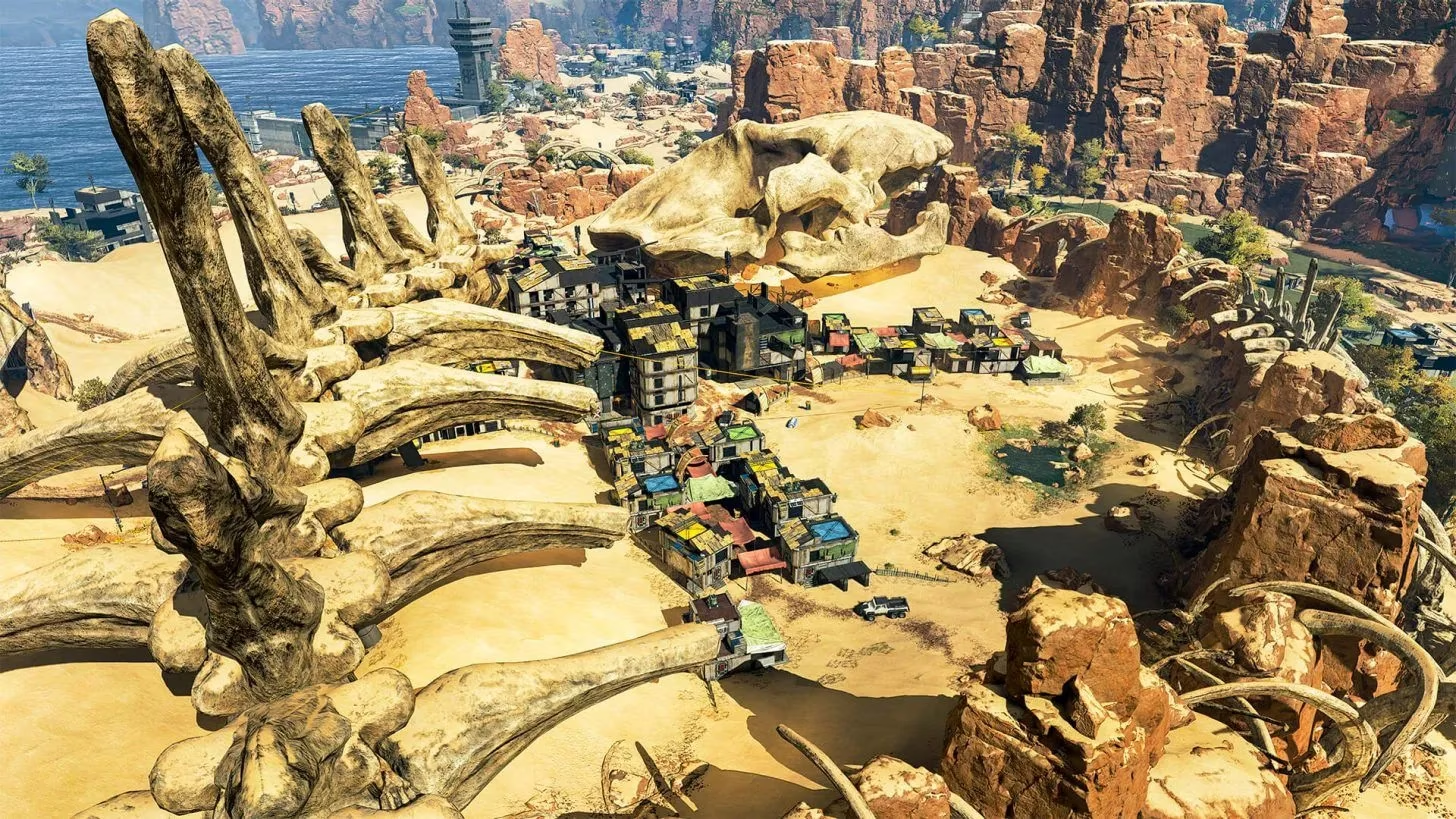
Nestled between Marketplace and Thunderdome, Skull Town occupied the very heart of the original Kings Canyon. The location was a labyrinth of loot-packed shanties huddled beneath the arched vertebrae of an unknown beast, creating a verticality that turned every alleyway into a potential deathtrap. Fighting there felt like being inside a Mad Max mosh pit orchestrated by a hyperactive DJ—you could sprint through a building and find an enemy already looting the same bin, leading to those twitchy, point-blank duels that quickened the pulse. Rooftop hopping gave you sightlines over the chaos, while the truly insane perched atop the two central towers or the skeleton’s summit, raining hell on the scrambling masses below.
What made Skull Town genuinely addictive, however, was its promise of perpetual motion. Even if you survived the initial massacre, the area’s position at the map’s nexus meant that third parties were as inevitable as the ring itself. Squads would rotate in from Thunderdome, Market, or the riverside caves, drawn by gunshots like sharks to a bloodied whale calf. You’d barely reload your weapon before a fresh squad crashed your doorstep, turning a simple looting session into an unending sequence of close-quarters ballets. For many of us, this was the ultimate Apex experience—pure, undiluted combat without the longueurs of a typical match.
Predictably, this intensity came at a cost to the game’s overall health. Skull Town acted like a vacuum cleaner set to maximum suction, inhaling half the lobby before the first ring even closed. Jumpmasters would divert their flight paths across the entire map just to brush its bones, leading to twenty or more players contesting a handful of weapon racks. I’ve lost count of the times I landed on a building’s roof, found no gun, and resorted to a humiliating fistfight while a fully-kitted Octane cackled from a distance. Matches on Kings Canyon often ended before round two, leaving the remaining squads to wander a deserted landscape, their ammunition and meds already depleted by the early bloodbath. The mode morphed from a battle royale into a glorified team deathmatch, and that wasn’t sustainable.
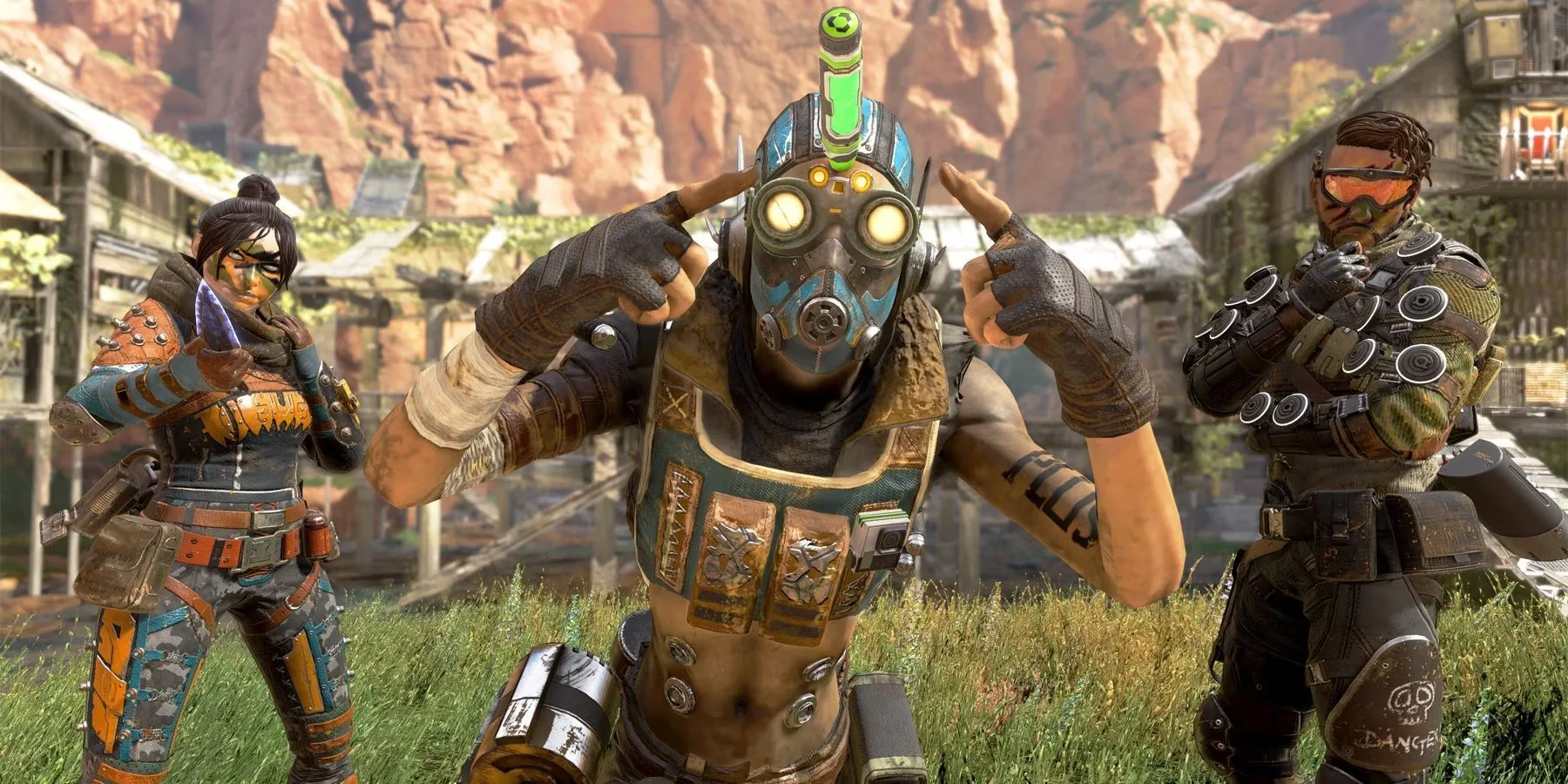
Respawn Entertainment made the controversial but necessary decision to obliterate Skull Town in Season 5’s “Fortune’s Favor.” When Loba blew the relic to smithereens, the community let out a collective howl—but deep down, we knew the map needed to breathe. With the focal point erased, players finally explored the rest of Kings Canyon, and Respawn gained the data needed to redesign the island into a more balanced arena. Yet, as seasons rolled by and the map shrank, a gaping hole remained where that adrenaline factory once stood. The legends needed a new spiritual core, something that honored the legacy without replicating the toxicity.
That answer emerged with Season 14: Hunted, when Respawn unveiled Relic, a POI built from the bones—literally—of the old Skull Town. Dropping into Relic for the first time felt like visiting a familiar neighborhood after a long absence: the same intimate, multi-story buildings clustered under a rebuilt skull, but with smarter proportions and subtler rotations. The new location is deliberately smaller, a design choice that prevents the initial swarm from devouring the entire server. It’s a phoenix rising from the ashes of its own overpopulated past, offering the same close-range thrills without condemning the rest of the map to irrelevance. Sure, you’ll still find hot action there, but now it’s a tempting appetizer rather than an all-consuming feast.
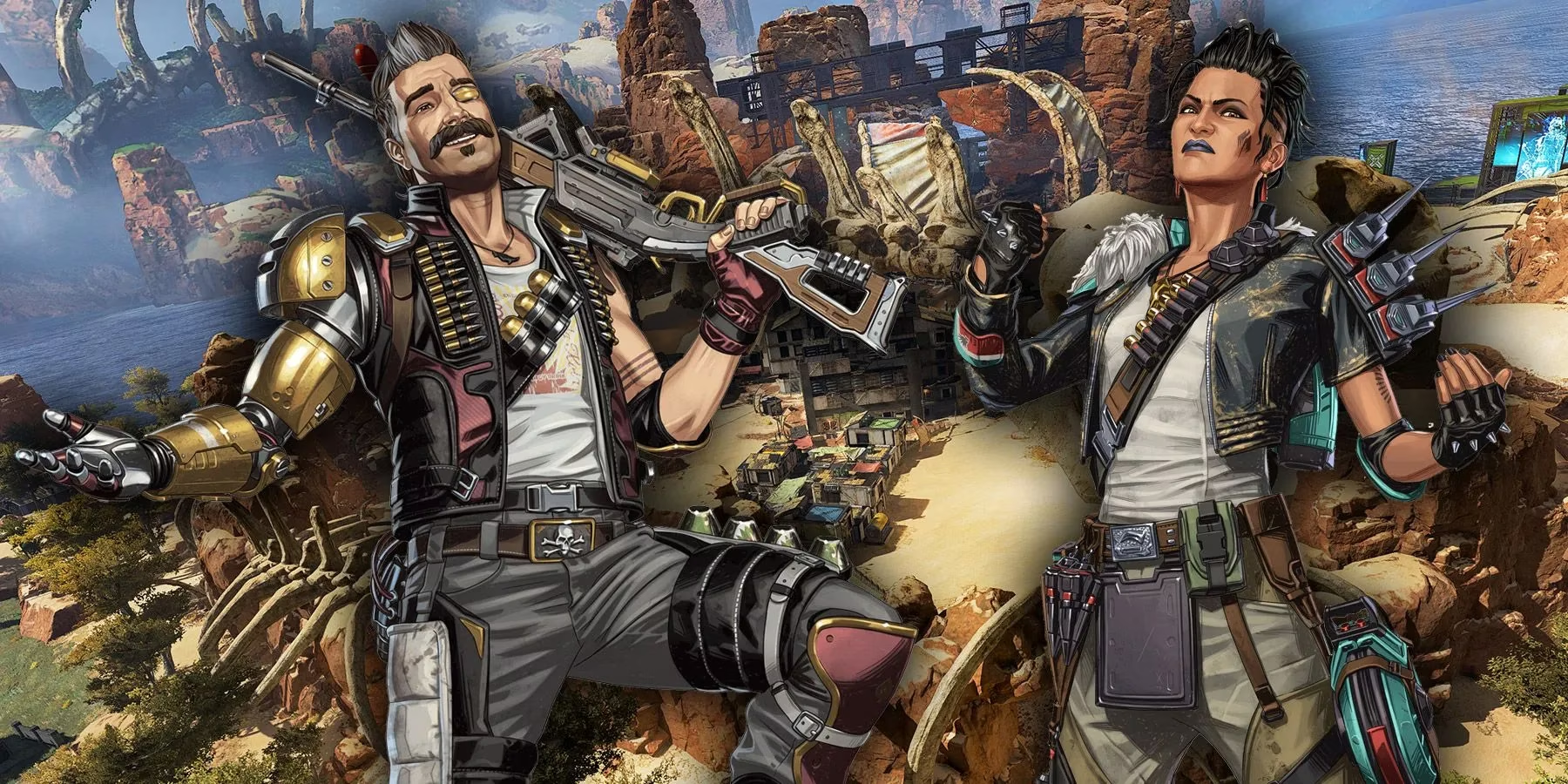
By 2026, Relic has cemented its place as a beloved fixture, proving that destruction can breed smarter creation. Matches on Kings Canyon now flow organically; squads spread out to Artillery, Capacitor, or the revamped Crash Site before converging on Relic in manageable waves. The POI still hosts those heart-stopping moments where a perfectly thrown arc star decides the fate of three teams, but it no longer suffocates the game’s pacing. Looking back, Skull Town was the glorious mistake that taught both the developers and the community a vital lesson: even the most exhilarating chaos needs a clutch to rein it in. Relic is that clutch, and I can’t wait to see what legends we’ll terrorize there in the seasons to come.