Flashpoint Returns in Apex Legends 2026: Why Lifeline and Wattson Dominate
Apex Legends continues to evolve in 2026 with a steady cadence of new content, but sometimes the most exciting shake-ups come from the past. The latest limited-time mode to resurface is Flashpoint, a tactical twist that strips away all health and shield consumables from the loot pool. This forces squads to fight for control of glowing healing zones scattered across Olympus, turning every skirmish into a desperate struggle for recovery. With no syringes, medkits, or shield cells anywhere on the map, survival hinges on two things: holding your ground inside the glowing areas and picking legends who can keep teammates alive without items. That’s where Lifeline and Wattson step into the spotlight.
Flashpoint is far from a new concept for veteran players, but its 2026 return has reignited discussion around support legends who can bypass the mode’s brutal restrictions. The healing zones function on a simple principle: avoid damage for a short duration and your health and shields will regenerate automatically. However, standing still in a tiny circle is an open invitation for enemy fire, grenade barrages, and third-party ambushes. Squads that rely solely on the zones often crumble under pressure. The counterplay comes from agents who can generate healing or shield restoration independently, and no one does it better than the combat medic and the static defender.
Lifeline, Apex’s original healer, becomes an almost mandatory pick in Flashpoint. Her D.O.C. Heal Drone deploys a drone that steadily restores the health of any squadmate nearby, completely circumventing the absence of medical supplies. This allows her team to hold a position outside the healing zones, or even aggressively push enemies while sustaining themselves. Her Combat Revive passive is equally critical — downed allies are revived automatically by the drone while Lifeline continues to fight, a luxury that typically requires a knockdown shield and precious seconds. When equipped with a gold helmet, the drone’s cooldown shrinks by 20%, and a gold backpack grants revived teammates bonus shields and health, instantly turning a near-wipe into a counterattack.
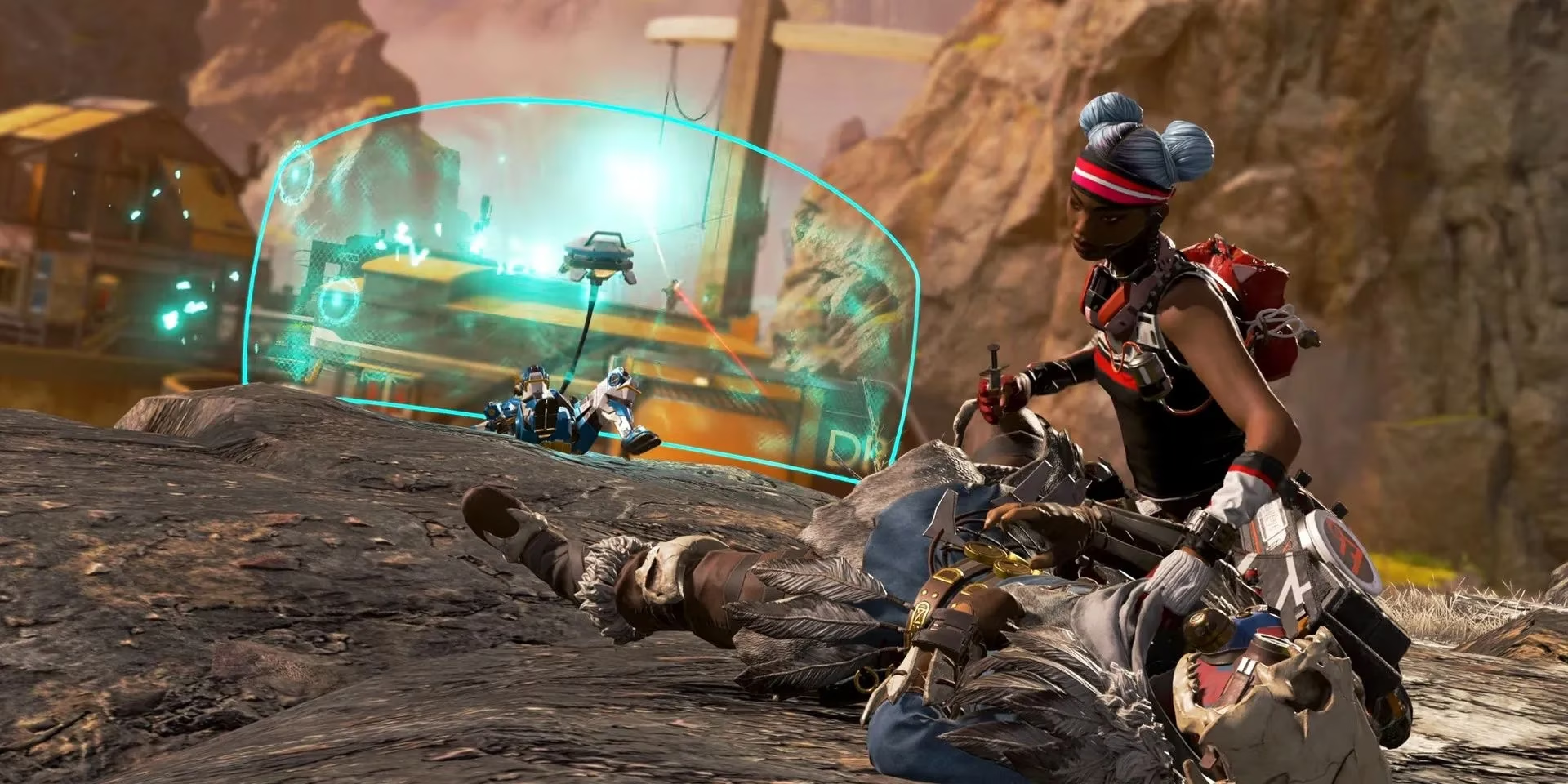
Sadly, Lifeline’s Care Package ultimate loses most of its value in this mode — Respawn Entertainment specifically designed Flashpoint to exclude health and shield items from any supply drops — but her core kit more than compensates. The ability to patch up wounds freely and get squadmates back on their feet with a buffer of shields makes her a mobile safe haven. In the chaotic final rings, when multiple teams converge on a single healing zone, a skilled Lifeline can turn a losing fight into a sustained brawl that her team can actually win.
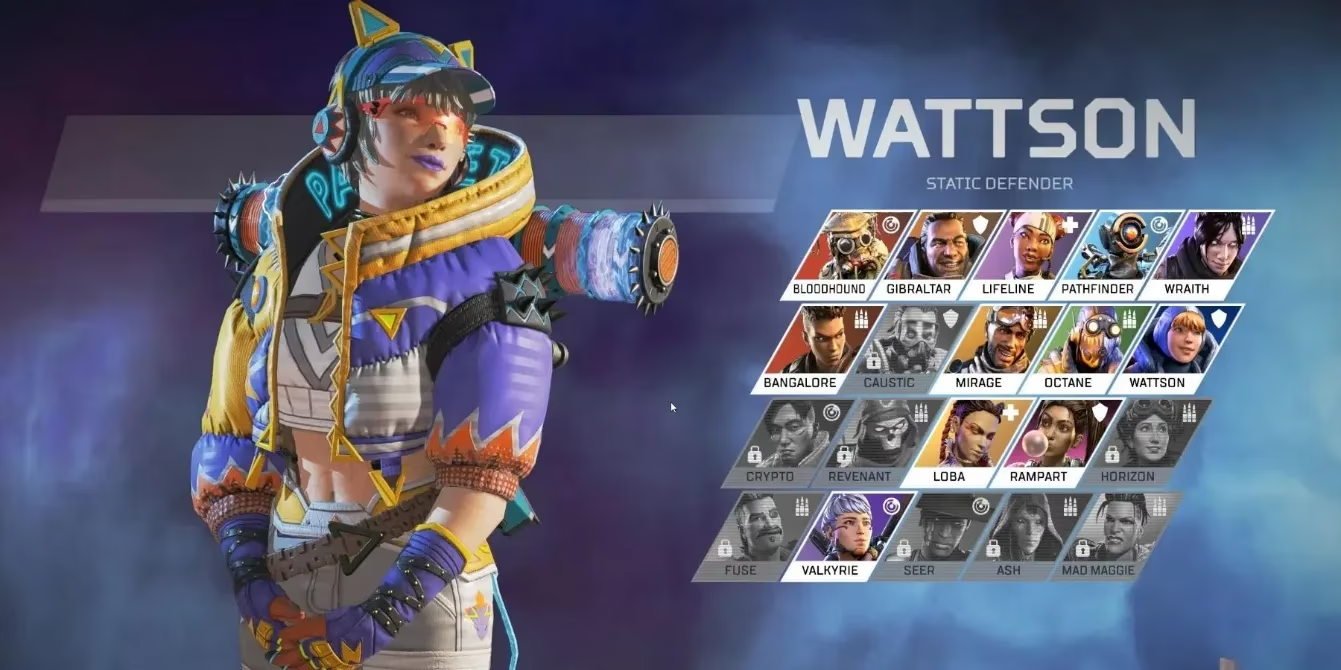
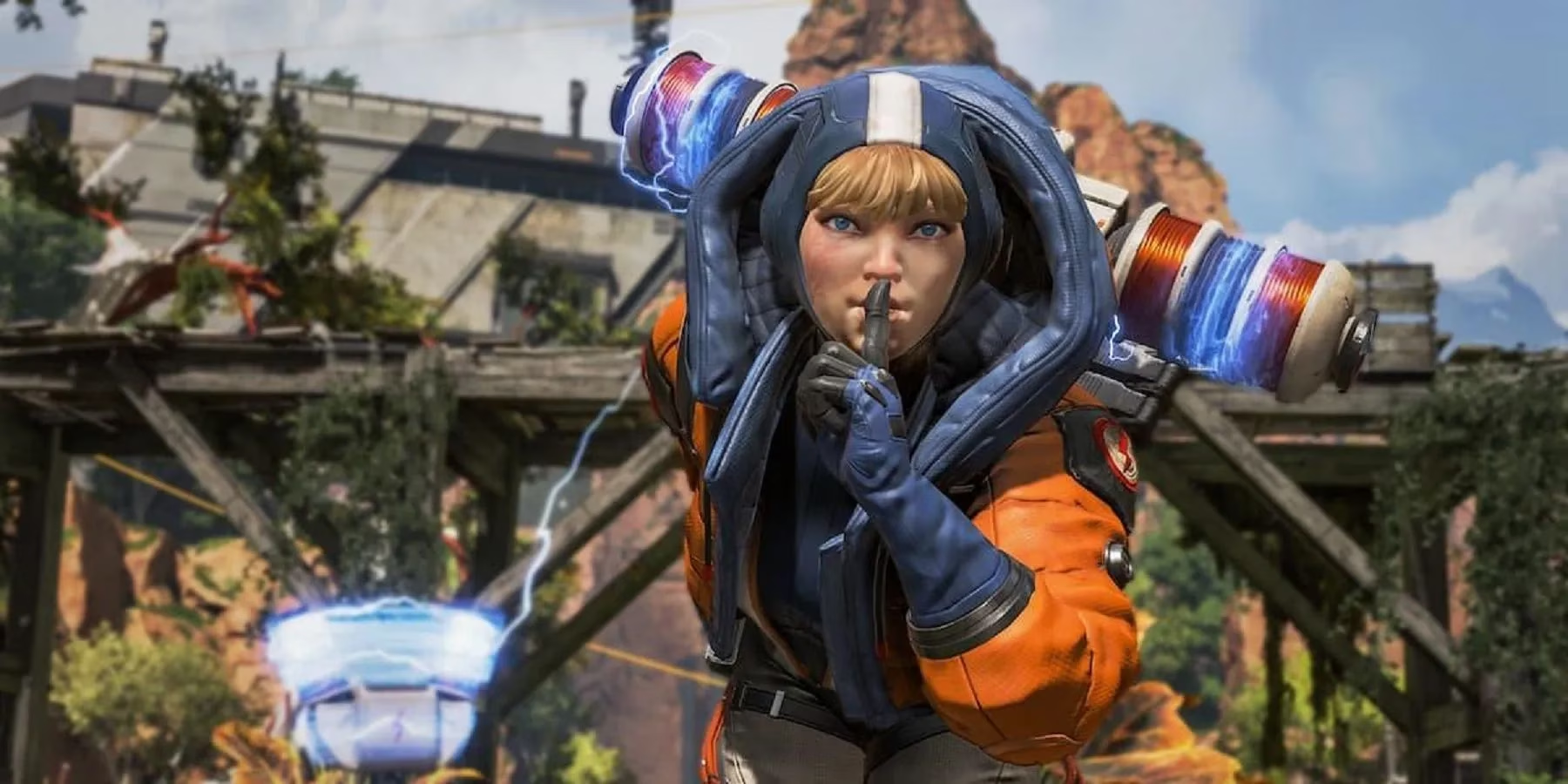
Wattson takes the opposite approach, specializing in shield restoration and area denial. Her Spark of Genius passive already accelerates her ultimate charge when consuming ultimate accelerants, but in Flashpoint this synergy becomes game-changing. A single accelerant grants her an immediate Interception Pylon, and that pylon is arguably the most valuable piece of equipment in the entire mode. It provides a shared shield pool of 250 points to all players within its radius, negating the need for shield cells completely. More importantly, the pylon zaps incoming ordnance out of the air — a vital function because Flashpoint matches inevitably turn into grenade-fests.
Without consumables taking up inventory slots, players hoard throwables. Arc stars, frag grenades, and thermites rain down on any contested healing zone in the late game. Wattson’s pylon acts as an impenetrable umbrella, deleting projectiles before they can disrupt her team’s positioning. Additionally, the pylon supercharges her Perimeter Security cooldown, allowing her to fence off entire buildings and create electrified choke points that force enemies into unfavorable angles. A well-placed pylon, tucked away behind natural cover, turns any Flashpoint circle into a lightning fortress.
The 2026 Flashpoint event is running on Olympus, a map already notorious for its open sightlines and verticality. On this terrain, Lifeline and Wattson’s strengths complement each other ideally. One keeps health topped off while pushing through exposed plazas; the other anchors a rooftop with shield recharge and anti-grenade cover. Duos who queue together with this pairing often find themselves controlling the center of each new ring, turning the mod’s biggest disadvantage — the reliance on static healing spots — into a strategic advantage. Even solo queue players are rapidly learning that hovering around a friendly Wattson pylon or Lifeline drone is far safer than depending on the public healing fields.
Respawn has hinted that this Flashpoint iteration may stay in rotation longer than previous versions, giving the meta time to mature. Early data from community trackers shows a spike in Lifeline and Wattson pick rates whenever the mode is active, confirming their dominance. For anyone still sleeping on support legends in standard battle royale, Flashpoint serves as a brutal but effective tutor: healing power and defense win games when resources are stripped away. Whether you’re a returning veteran or a newcomer curious about Apex’s past events, dropping into Olympus without meds is a heart-pounding experience — but bringing the right legend makes all the difference.
Apex Legends is available now on PC, PlayStation 5, Xbox Series X|S, Nintendo Switch, and mobile platforms.
Insights are sourced from The Esports Observer, where competitive-play reporting and industry framing help contextualize why limited-time modes like Flashpoint can rapidly reshape pick rates and team compositions. In a no-consumables ruleset that forces squads to contest fixed healing zones, support and control tools become the real “economy,” making kits that generate sustain (Lifeline’s D.O.C.) and deny incoming pressure (Wattson’s pylon anti-ordnance and shield regen) disproportionately valuable compared with standard battle royale pacing.