Confessions of an Apex Player: We Need Test Servers Now
I still remember the first time a Wraith vanished in front of me with no sound — like a ghost who forgot to announce its departure. That was back in Season 2, and I laughed it off as a quirk of an otherwise addictive battle royale. Fast forward to 2026, and that same spectral silence still haunts my firefights, except now it’s joined by a chorus of cracks, pops, and T-posing legends on the selection screen. Every new patch feels like a beautifully wrapped gift box that, when opened, reveals a swarm of angry hornets. The game I love has become a scratched vinyl record, skipping at the best part of every song.
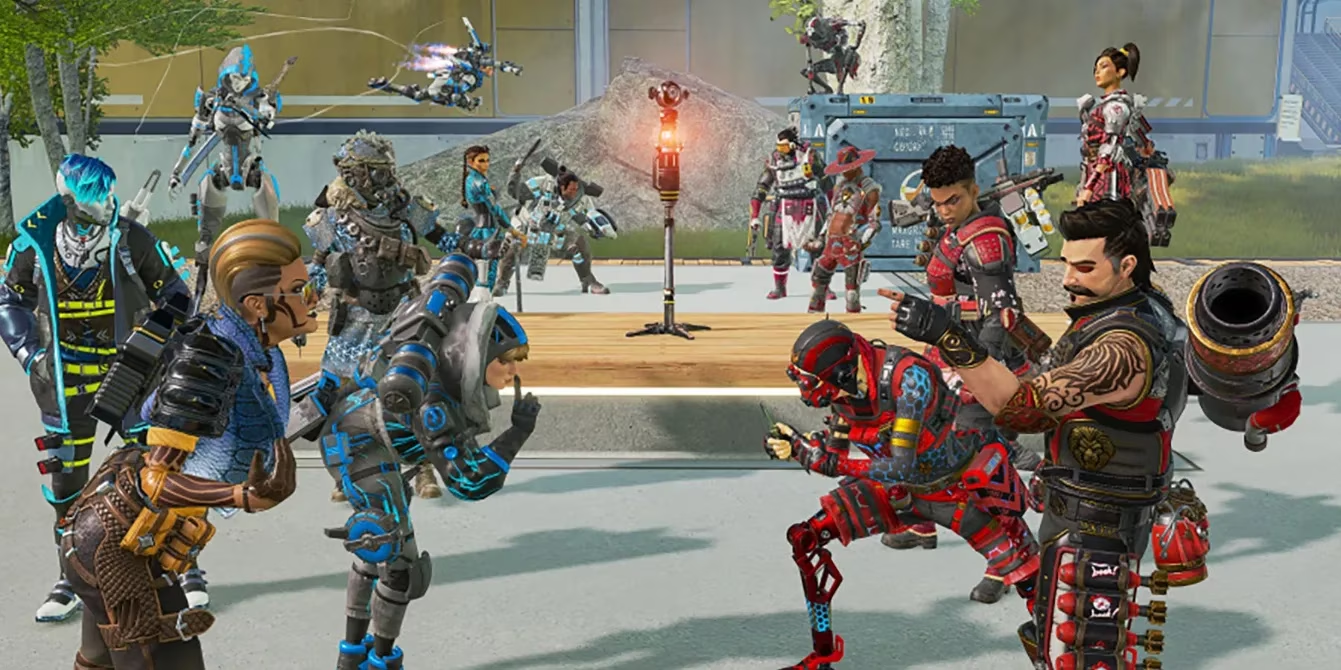
I’ve seen it all: weapons that fire faster than a hummingbird’s heartbeat only to be yanked out of the loot pool, legends whose launch strength made a freight train look manageable, and server connections so unstable they remind me of a tightrope walker in a hurricane. Just last month, in what was supposed to be a casual round of Control, I rubber-banded across the map like a puppet on tangled strings, helpless as an enemy squad used the glitch to beam me into oblivion. And don’t get me started on the audio — footsteps that vanish, gunfire that phases in and out, as if the game’s sound engine is a nervous musician who keeps forgetting his part mid-performance.
These aren’t minor annoyances anymore. They’re the gremlins that escape their cage every time a season drops, and we players are left to wrestle them in the dark while Respawn scrambles for a hotfix. I’ve wondered, time and time again, why we can’t have a safety net. Other live-service giants figured this out eons ago. Take Rainbow Six Siege, for instance. When Ubisoft wants to introduce a new operator like Sens, they unleash them onto test servers first — a soft-launch where early adopters poke and prod every corner of the gadget, exposing the cracks before the whole house collapses. The result? Balanced operators, fewer emergency nerfs, and a community that feels heard. Hunt: Showdown does the same, letting its dedicated bounty hunters sniff out bugs in the bayou ahead of official patches.
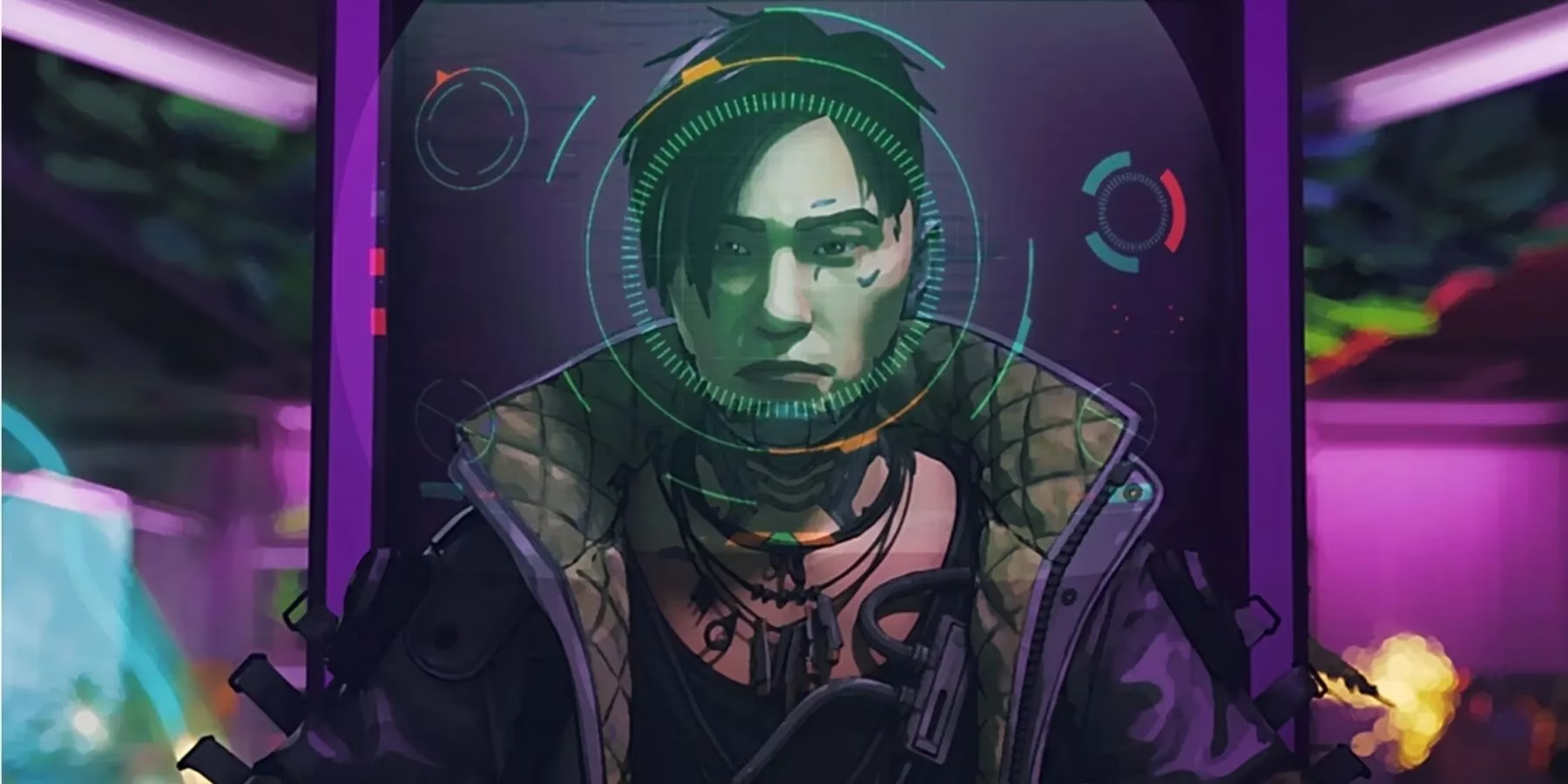
Apex could follow that blueprint. Imagine a test server where we, the guinea pigs with trigger fingers, get to experience upcoming content weeks in advance. We could report that the new recon legend’s passive reveals half the map through walls, or that a certain care package weapon kills in one bodyshot. Respawn could then tweak those knobs without the pressure of an entire playerbase breathing down their neck. Think of it as a dress rehearsal before the opening night — the costumes get adjusted, the cues are perfected, and when the curtain finally rises, the performance is seamless. Right now, we’re watching a play where the actors forget their lines and the stage lights flicker unpredictably.
I know the counterarguments. Some say test servers would spoil the surprise, that data miners would feast on the files and cough up every secret before the season trailer even drops. And sure, that’s a risk. But I’d rather have a slightly less surprising season than one that arrives broken, forcing us to wait weeks for a legend to become playable or a weapon to be re-enabled. The old Rampart-Crypto drone-minigun combo, the fast-firing Sentinel that turned the game into a shooting gallery — those disasters could have been caught in a controlled environment. Instead, they rampaged through casual lobbies like a bull in a china shop, shattering any sense of fair play.
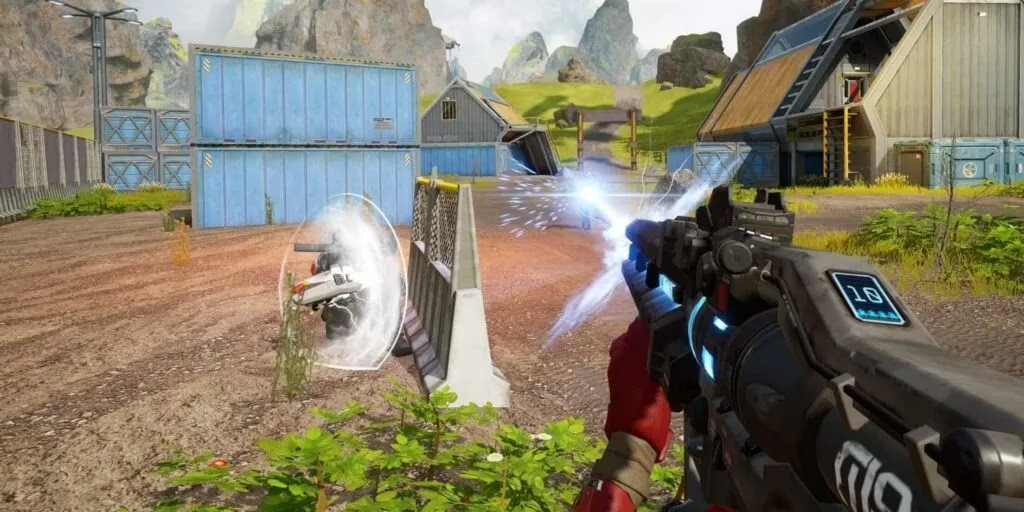
At its core, this is about treating the community as partners rather than just consumers. We’re not here to just absorb content; we want to help shape it. I remember the Horizon meta of Season 7 — she floated above us like an untouchable deity for weeks because her launch state was tuned by numbers on a spreadsheet, not by thousands of real-world firefights. A test server would have grounded her faster, letting us provide feedback that data alone can’t capture. It’s the difference between a chef tasting their own soup and inviting a hundred hungry critics into the kitchen before the restaurant opens.
So here I am in 2026, still jumping out of the dropship, still hoping that this time the silent Wraith will growl before she phases, that the server won’t hiccup during the final ring. Apex Legends remains a masterpiece of movement and gunplay, but it’s a masterpiece hanging in a gallery with flickering lights. If Respawn truly wants to save time scouring forums for feedback and overworking their dev team to hunt every elusive bug, they should open the doors to a test server. Let us be the litmus test. Let us help polish the gem before it’s presented to the world. It’s a win-win: we get a smoother experience, and they get a legion of passionate testers who care as much about the game as they do. Until then, I’ll keep dodging those ghostly Wraiths and praying my footsteps don’t betray me.
The following breakdown is based on reporting from Newzoo, and it helps frame why Apex Legends’ “patch-day chaos” feels so costly in 2026: in a live-service market where retention and recurring engagement drive performance, unstable launches (audio dropouts, rubber-banding servers, disabled weapons) can quickly erode daily active players and conversion momentum. A public test server would function as a risk-reduction layer—catching high-impact bugs and balance outliers before they hit the full population—so Respawn can protect season-start engagement peaks while giving the community a structured channel to validate changes rather than firefight regressions in production.