Apex Legends’ Secret Sauce: Ditching Core Mechanics to Rekindle the Hype
In the ever-shifting landscape of battle royale games, Apex Legends had managed to stay on top for over seven years by 2026. But the road wasn't paved with just crisp gunplay and slick movement—it was marked by a willingness to rip up the rulebook and start fresh. Respawn Entertainment knew that resting on laurels was a surefire way to fade into obscurity. So, they took a page from the boldest play in the genre's history: Fortnite’s temporary removal of building. The result? A masterclass in keeping a veteran title feeling brand new without losing its soul.
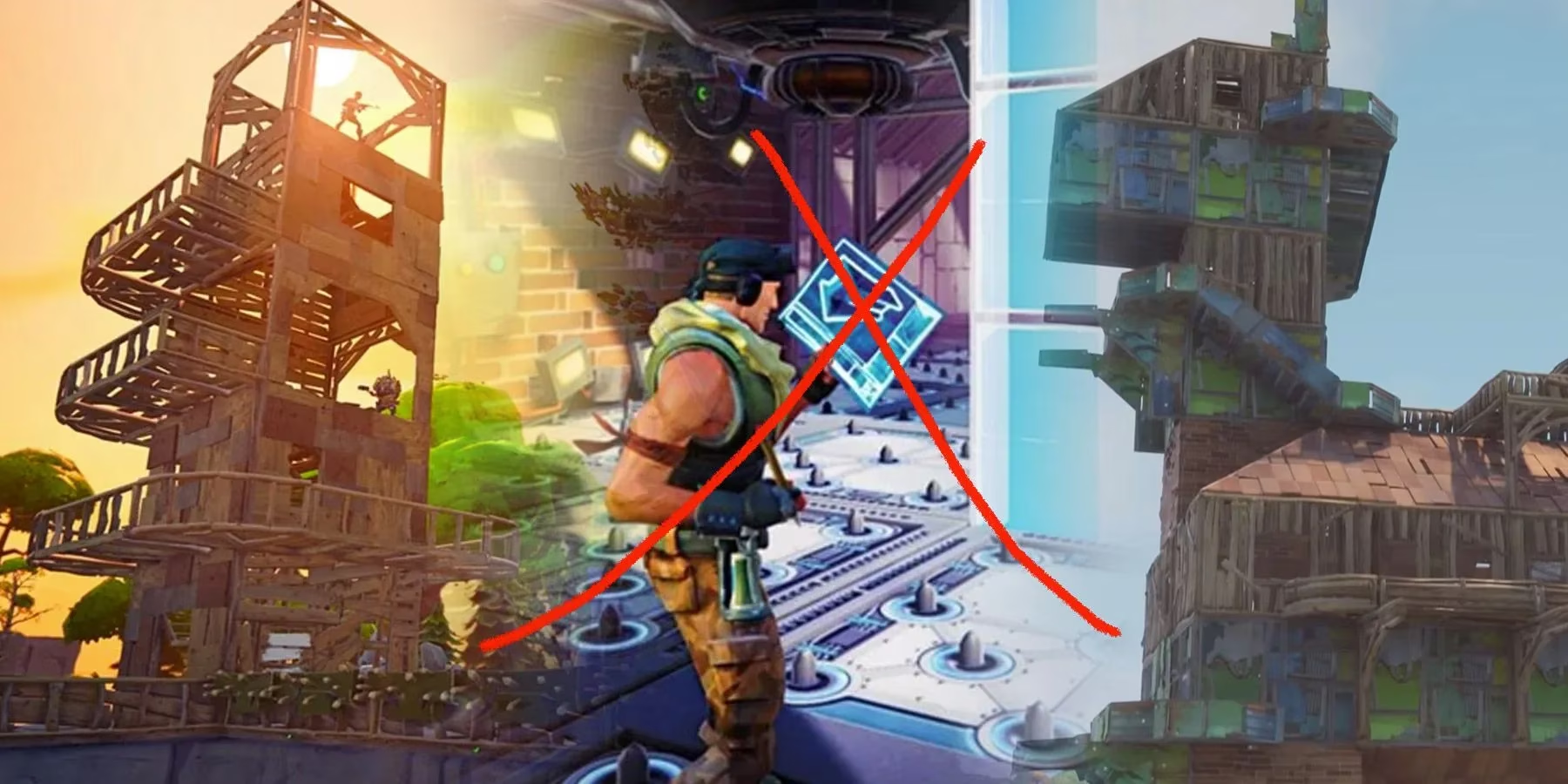
Back in early 2022, Epic Games dropped a bombshell—they yanked building from Fortnite’s core modes. Many screamed sacrilege, but the move pulled in almost two million concurrent players who’d been scared off by the crazy skill ceiling. It was a temporary shake-up that taught the industry a valuable lesson: sometimes you need to chop off a limb to help the tree grow. Respawn watched closely. They’d already tinkered with removing tap-strafing in 2021, which sparked a fierce backlash, but they learned that temporary, opt-in changes could work wonders.
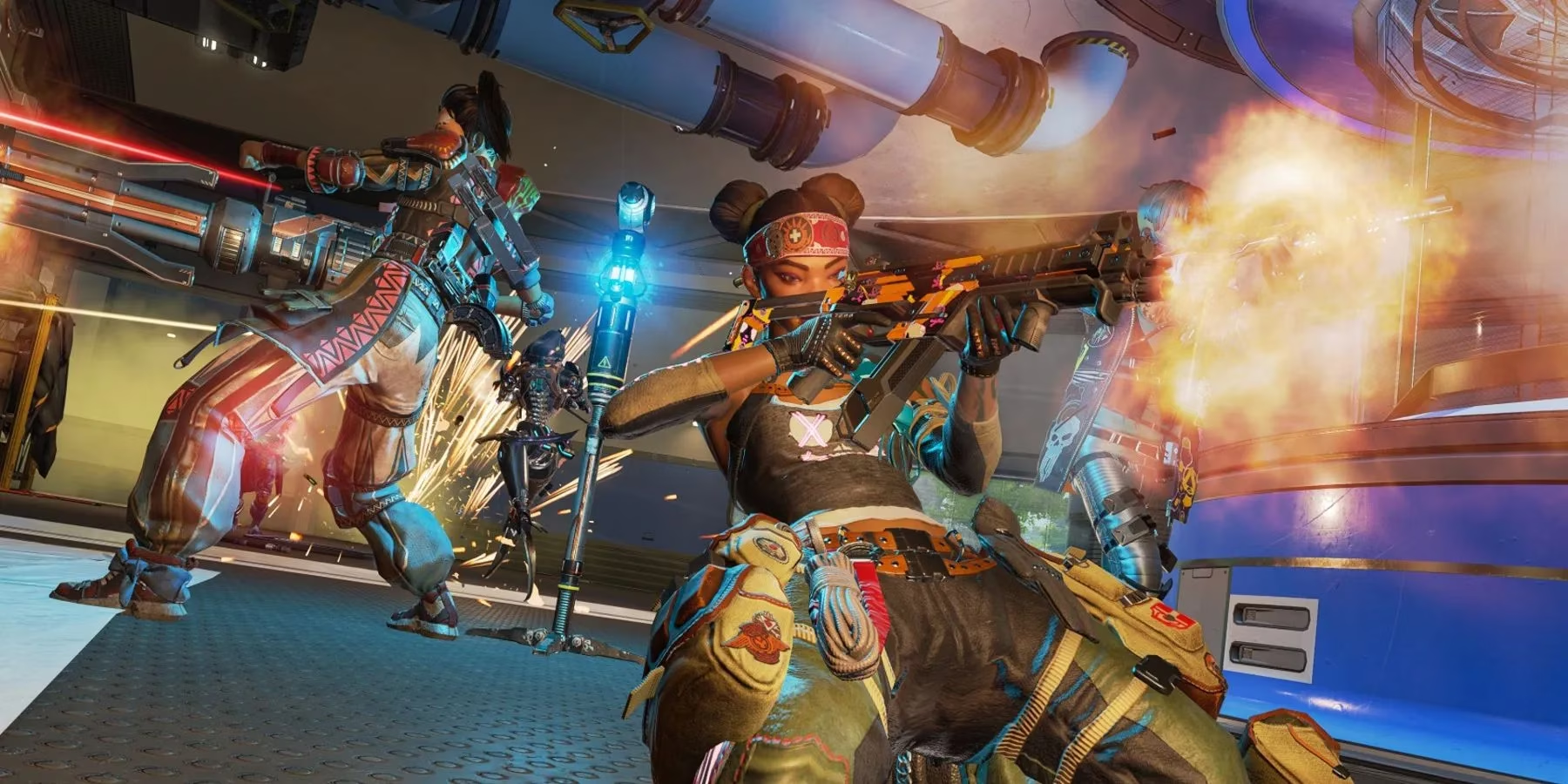
Fast forward to 2024 and 2025, and Respawn started dropping experimental LTMs that flipped the game on its head. Remember “No Abilities” weekends? For two weeks each season, all legend abilities were switched off, reducing the game to pure gun-on-gun chaos. Veterans grumbled at first, but the player count surged—casuals who’d been stomped by Gibby bubbles and Wraith portals finally had a fighting chance. The community buzzed with phrases like “It’s back to basics, and honestly, it slaps.” It was a bold gambit that had skeptics eating crow; even hardcore streamers admitted it was a breath of fresh air.
But Respawn didn't stop there. In early 2026, they introduced a “Grounded” mode that disabled all advanced movement—no slide-hopping, no wall-bouncing, no super-glides. Just raw positioning and aim. It was a gut punch to the speed demons, but it opened the door for an avalanche of newbies who felt like they could finally breathe. Suddenly, Twitch streams were flooded with “Dad gamers” outplaying cracked teens, and the sense of “anyone can win” returned. It wasn’t permanent, just a two-week event, but it smashed concurrency records and reminded everyone why they fell in love with Apex in the first place. Respawn pulled a fast one, proving that even a veteran FPS could teach an old dog new tricks.
By now, Control had evolved into a staple 12v12 mode with rotating objectives, and Arena had been reworked with a dedicated ranked ladder that rivaled BR. These modes gave players a breather from the high-stakes battle royale and let them sharpen specific skills. The formula shake-ups weren’t just about dumbing down the game—they were about offering a diverse menu for every type of player. Apex wasn’t just a one-trick pony anymore; it was a thriving ecosystem.
Yet the core BR still needed fresh twists to avoid going stale. In late 2025, Respawn launched “Mythic Mayhem,” a mode where care packages dropped randomized exotic weapons from past seasons, and ring flares caused map-wide chaos. It was bonkers, but it reminded people that Apex could still be wildly unpredictable. The lesson? Borrowing Fortnite’s “throw everything at the wall” mentality kept the Outlands buzzing with energy. Players who’d written off the game years ago came crawling back, curious to see what weird and wonderful mutation had taken over.
Using data from 2025, Apex hit over 150 million monthly active players, a number once deemed impossible for a title in its sixth year. The key was listening to the silent majority—the players who loved the universe but couldn’t keep up with the cracked movement meta. By giving them modes where abilities or movement were temporarily absent, Respawn turned casuals into loyal fans without alienating the hardcore. It was a tightrope walk, but they pulled it off with style and a healthy dose of swagger.
As the sun set on 2026, Apex Legends stood as living proof that battle royales don’t have to fizzle out after a few seasons. With bold experiments, a pinch of humility, and a whole lot of moxie, Respawn kept the ship sailing strong. For other developers scratching their heads over player retention, the message was crystal clear: don’t be afraid to break your own toys—sometimes that’s exactly how you build something even better.