Apex Legends Season 11 Escape: A 2026 Retrospective on Storm Point and Ash
In 2026, Apex Legends Season 11, Escape, reads like a time capsule from a turning point in the battle royale's history. The season arrived in 2021 with a new map, a new legend, a new SMG, and a long list of balance changes that reshaped everything from defensive play to supply-drop reliability. For modern players, it is a reminder of how far the live game has traveled—and how much of its DNA was shaped by this chapter. For anyone who missed it the first time around—no judgment here—Escape is still worth studying as a case study in how Respawn Entertainment expands a world without losing its edge.
Storm Point: A Bigger, Meaner Playground
Storm Point was the headline attraction, and it made an immediate impression by being roughly 15% larger than World's Edge. That size was not just about square footage; it was about pacing, rotation planning, and the constant threat of being caught between squads and wildlife. The map swapped familiar jump towers for gravity cannons, giving players a different kind of launch tool and a new set of angles to learn. It also introduced Prowlers, Spiders, and Flyers as environmental threats, turning some rotations into a fight for survival rather than a simple sprint.

The result was a map that felt adventurous and slightly hostile in equal measure. Players could not treat every corner as a clean duel arena; sometimes the local wildlife had other ideas. That unpredictability became part of Storm Point's identity, and it helped Season 11 stand apart from previous map debuts.
Ash: The Titanfall Veteran Arrives
Ash was one of the most anticipated legends in Apex Legends history, largely because her roots stretch back to Respawn's Titanfall series. She first appeared in Apex Legends during the Ashes to Ashes questline in July 2021, teasing a larger arrival, and Season 11 finally brought her into the Games as a playable legend. Her kit was framed around a tactical, a passive, and an ultimate, giving her a familiar three-part structure while leaning into her menacing, precise personality.
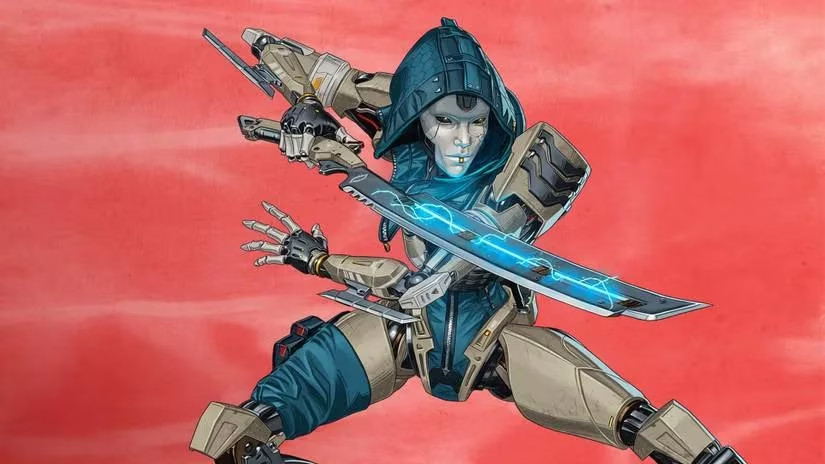
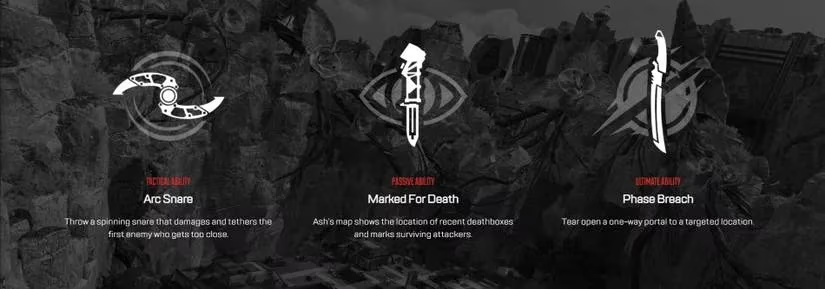
Her arrival gave the roster another crossover star and gave Titanfall fans a familiar face with a new role. Ash did not simply show up as fan service; she arrived as a legend designed to fit the pace and structure of the Apex Games.
C.A.R. SMG: The Shapeshifter
The C.A.R. SMG was another Titanfall favorite that players had requested for months. Its defining feature was flexibility: it could switch between heavy and light ammo, making it a weapon that adapted to what players found on the ground. Early comparisons placed it near the R-99 and the Volt in terms of role, and that flexibility made it a tempting pickup for players who valued versatility over a single fixed identity.

That ammo-swapping trick was not just a novelty. It gave the C.A.R. a practical edge in a game where loot luck can decide a fight. Players could keep the gun relevant as their inventory changed, and that made it one of Season 11's most interesting additions.
Wattson Gets the Spotlight
Season 11 also delivered long-awaited Wattson improvements. The developer notes framed it boldly: move aside Ash, this was Wattson's season. Her win rate and encounter win rate had remained above average, but much of the high-level data did not match player perception. The goal was to redistribute her invisible power into parts of her kit that shaped the battlefield more actively.
| Wattson Change | Season 11 Adjustment |
|---|---|
| Fence damage | Increased from 15 to 20 |
| Fence debuff duration | Increased from 1.5 to 3 seconds |
| Fence recharge time | Reduced from 30 to 15 seconds |
| Fence placement range | Increased by 50% |
| Fence reactivation delay | Reduced from 1.0 to 0.4 seconds |
| Pylon count | Reduced from 3 to 1 |
| Pylon duration | Now lasts forever |
| Pylon shield pool | 250 shields |
| Pylon recharge rate | Increased to 5 shields per second |
Wattson could also place tactical and ultimate objects on valid surfaces above eye level, and she moved at unarmed speed while readying or placing fence nodes. Fence nodes could be placed as soon as the weapon was readied rather than waiting for the animation to finish. Her Interception Pylon was reworked significantly: it lasted forever, carried a finite 250-shield pool, displayed remaining shields in the UI, and could still zap ordnance even when out of shields. Taking damage while regenerating shields delayed continued regeneration by one second.
That one stings for longtime Wattson mains who loved stacking three pylons, but the trade-off was a more active and responsive defensive kit. The changes encouraged Wattson players to build positions quickly, use fences in open combat, and treat the pylon as a resource rather than a permanent safety net.
Weapon and Gear Shifts
Season 11's weapon changes were extensive. The fully kitted rotation added the Mastiff, 30-30 Repeater, R-301, C.A.R., and Longbow, while removing the Peacekeeper, Rampage, RE-45, Flatline, and Charge Rifle. The EVA-8 received base fire-rate adjustments, the Peacekeeper gained slightly larger pellets and a faster choke-up time, and the Longbow had a recent buff walked back. The L-STAR saw reduced barrel effectiveness, significantly reduced projectile collision size, and damage lowered from 18 to 17. The G7 Scout moved into the supply drop with damage increased from 34 to 36 and the Double Tap hop-up added.
Supply-drop weapon rates also changed: early game increased from 25% to 50%, mid game from 50% to 75%, and late game from 75% to 100%. Hot Zone gold loot rates were increased to make those dynamic drop spots more enticing. Crafting became more generous with ammo—light, heavy, and energy ammo rose from 20 to 60, shotgun ammo from 8 to 24, arrows from 16 to 48, and sniper ammo from 12 to 36—while ammo crafting price increased from 5 to 10 per weapon. Evo Armor points from crafting rose from 100 to 150, with cost increased from 45 to 50, and a sniper bundle was replaced by a shotgun bundle featuring Dual Shell.
Enemy NPCs also received updates. Prowler health across the game increased from 90 to 114, and Prowlers on World's Edge plus Flyers on Kings Canyon began rewarding Evo points. All damage done to AI now rewarded progress toward Evo armor. In Arenas, supply drops landed outside the first ring when possible and arrived 10 seconds earlier, while purple weapons appeared more often in earlier rounds.
Quality of Life and Bug Fixes
Season 11 was not only about spectacle. Teammates could show self-revive status on in-world game tags, voice lines were added for players who ran out of ammo, Arena map rotation images displayed up to five maps, and Social Awareness Badges unlocked by default for all accounts. Bug fixes addressed issues such as Caustic traps protecting Seer ultimates, Volt charm placement, Boosted Loader ammo loss, Valkyrie tactical missiles dealing health damage through shields, missing legend-select screens, audio overlaps, a floating rock on World's Edge, and a finisher-cancel bug that could let knocked-down players stand and jump.
Players know the feeling: pushing a supply drop and whiffing on a weapon is rough, and Season 11 tried to smooth out that frustration. In 2026, Escape is no longer the live meta, but it remains a reference point. It showed how Respawn could expand a map, introduce a crossover legend, and rework a defensive character in one swing. For anyone tracing the evolution of Apex Legends, Season 11 is still a chapter worth revisiting—not as current news, but as a moment that explains why later seasons look the way they do.