Apex Legends' Botched Credit Update: Misspelled Streamer Name Sparks Community Backlash
In the ever-evolving landscape of live-service games, even well-intentioned gestures can backfire spectacularly. This was precisely the case in early 2026 when Apex Legends, a titan in the free-to-play battle royale arena, attempted to rectify a long-standing community grievance. For years, players and creators alike had voiced their frustration over the lack of proper attribution for the artists and streamers who contributed to the game's iconic cosmetic designs. Respawn Entertainment, the developer behind Apex Legends, finally heeded the call with a new UI update designed to shine a spotlight on these collaborators. However, what should have been a moment of celebration and reconciliation quickly soured due to a glaring and, to many, symbolic error: the misspelling of popular streamer LuluLuvely's name as "LuluLovely."
The Rocky Road to Recognition 🎨
The relationship between LuluLuvely and Apex Legends has been, at best, a turbulent dance. She rose to prominence within the streaming world largely through her skilled and entertaining gameplay of Respawn's title. Yet, over the past year, that relationship frayed. The streamer had publicly contemplated abandoning the game due to perceived content droughts, but a more significant point of contention was financial. LuluLuvely had previously claimed that Electronic Arts (EA) refused to pay royalties for skins that content creators, including herself, had helped conceptualize and promote. These criticisms weren't whispered in corners; they became a rallying cry, amplifying the community's broader demand for transparent and fair credit for all creative contributors. The desire for recognition wasn't just about vanity—for many in Apex's massive player base, these unique skins are the lifeblood of the game's cosmetic ecosystem, and knowing their origins adds depth and appreciation.
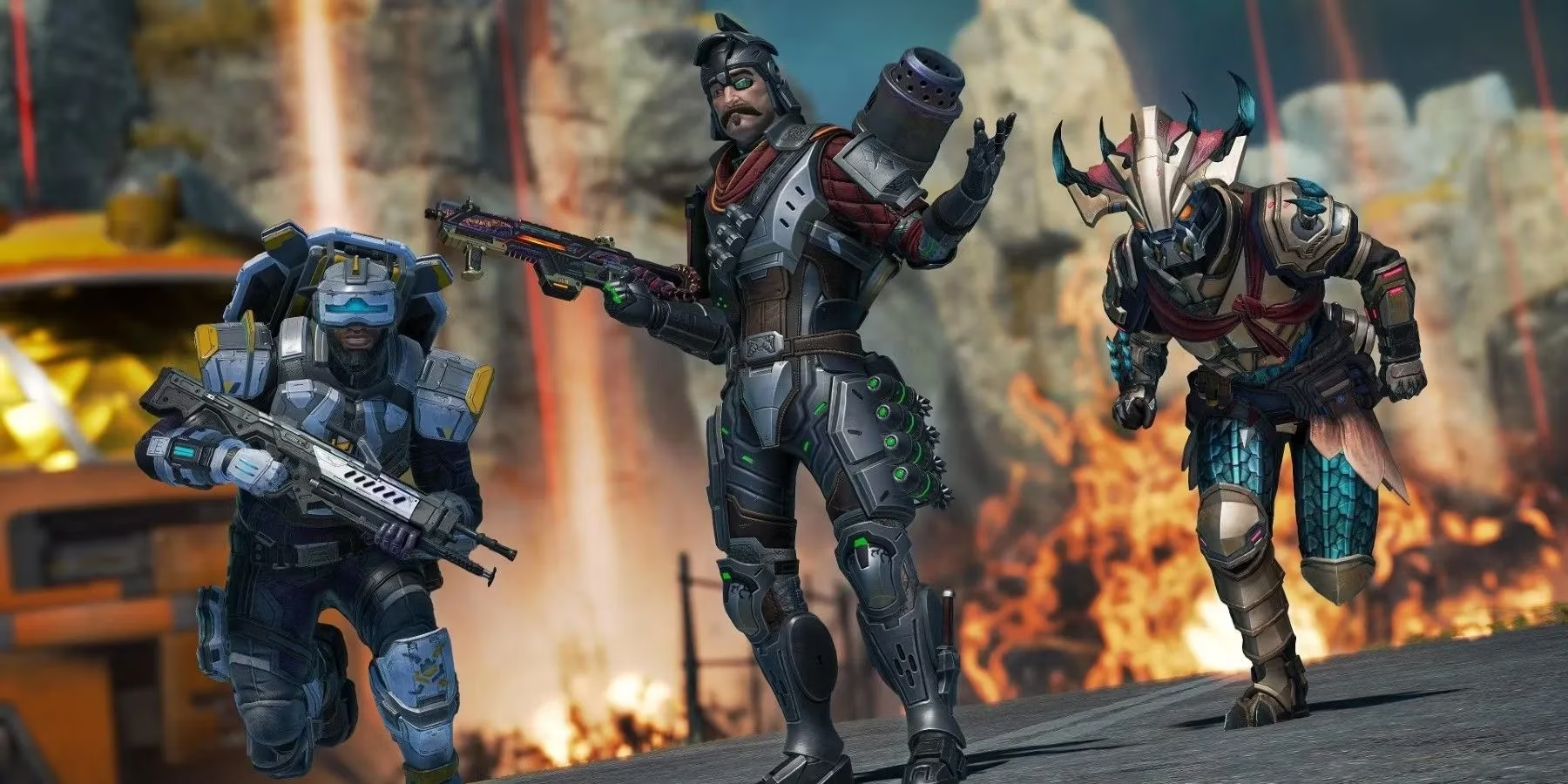
An Apology That Missed the Mark 🎯
When Respawn's credit update went live, the misspelling was immediately spotted. The developer's subsequent apology on social media felt to many like pouring salt on the wound. Respawn stated the update had been "shipped incomplete," an explanation that landed with the grace of a lead balloon in the community. The apology tweet was swiftly flooded with responses that ranged from disappointment to outright anger. Critics pointed out that crediting artists shouldn't have taken years to implement, and that labeling the error as an "incomplete" release felt like a weak excuse, a band-aid on a bullet wound. To the community, this wasn't just a typo; it was a symptom of a larger issue where recognizing collaborators seemed like an afterthought, a box to be checked hastily rather than an integral part of the creative process. In an industry where details matter, this mistake stood out like a sore thumb.
The Weight of Expectation in a Live-Service World ⚖️
Apex Legends is not just any game; it's a cultural phenomenon and a consistent top performer. With that success comes immense expectation. Players anticipate that updates, especially those addressing core community feedback, will be executed with precision and care. The botched credit update highlighted the immense pressure on developers constantly navigating between player demands, tight schedules, and corporate oversight. Was it a simple, honest mistake in a rushed patch? Or did it reveal a deeper, systemic undervaluing of contributor recognition? For creators like LuluLuvely, such errors can feel personal, reducing their contribution to a garbled username in a menu. It's a reminder that in the digital age, attribution is currency, and getting it wrong can be as damaging as not giving it at all.
A Community's Vocal Power 📢
The silver lining in this entire debacle is the demonstrated power and passion of the Apex Legends community. Their vocal advocacy is what pushed for credited collaborations in the first place. Their swift and pointed reaction to the error ensures that Respawn cannot simply sweep the issue under the rug. The community's role is paradoxical: it can be a source of immense pressure, scrutinizing every move, but it is also the game's greatest champion, deeply invested in its integrity and success. This incident serves as a case study in how player bases now expect to be partners in a game's evolution, not just consumers.
Looking Forward: Beyond the Typo 🔮
Ultimately, the core fact remains a positive one: Respawn has begun the process of formally crediting collaborators. This is a crucial step toward mending fences with the creative community that helps sustain the game's vibrancy. The misspelling fiasco, while unfortunate, should serve as a catalyst for implementing more robust, respectful, and error-proof systems for attribution. In 2026, transparency isn't just appreciated; it's demanded. For Apex Legends to maintain its position at the pinnacle of competitive gaming, it must treat every collaborator's name with the same reverence as its most prized legendary skin. The path forward requires turning this stumble into a stride, ensuring that credit is not just given, but given correctly and consistently—because in the eyes of the community, a name is more than text; it's a legacy.
Key Takeaways from the Apex Legends Credit Controversy:
-
The Ask Was Simple: The community clearly wanted credited artists and collaborators.
-
The Execution Faltered: A misspelling undermined the goodwill of the entire update.
-
Communication is Key: Respawn's "incomplete update" apology was widely panned as insufficient.
-
Details Matter: In a game built on prestige cosmetics, correct attribution is a prestige feature itself.
-
The Future is Transparent: Lasting success requires systemic, respectful recognition of all contributors.
The saga of the misspelled name is a modern parable for live-service games. It teaches that fixing one problem clumsily can create another, and that in the delicate ecosystem of player-developer relations, every character counts—both in the code and in the credits.